

When most homeowners think about roof damage, they picture heavy rain, hail, or high winds. But one of the most overlooked threats to your roof (especially in Georgia) is the freeze-thaw cycle. While Atlanta doesn’t experience long, harsh winters, fluctuating temperatures can quietly cause serious roof damage over time.
At Firebrand Roofing, we regularly inspect and repair roofs affected by freeze-thaw damage across the Atlanta metro area. Understanding how this process impacts your roof can help you prevent costly repairs and extend the life of your roofing system.
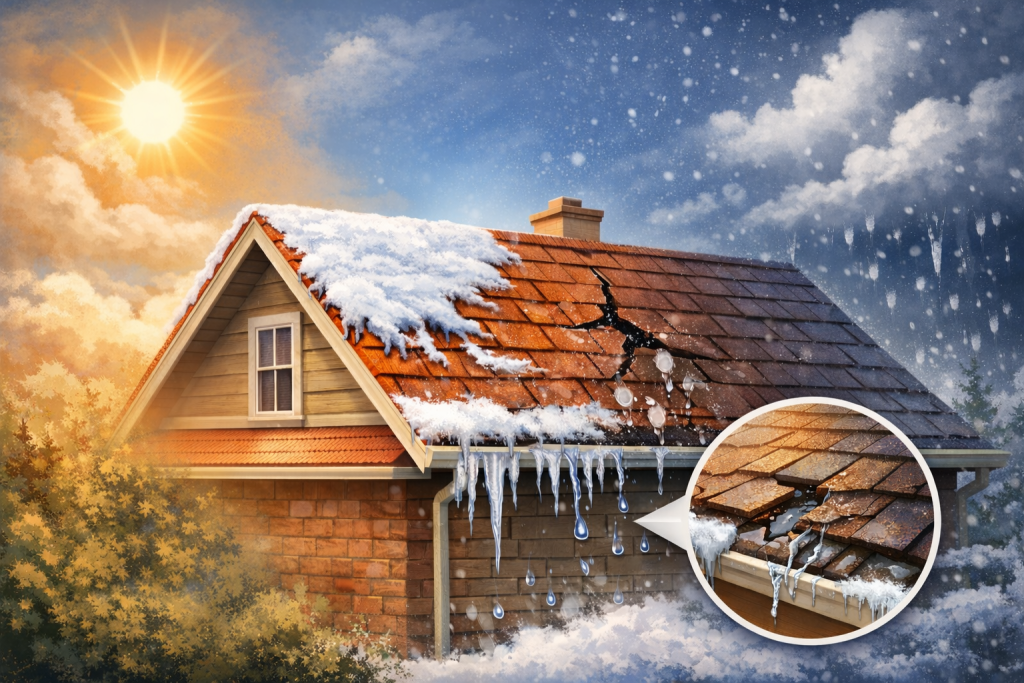
What Is a Freeze-Thaw Cycle?
A freeze-thaw cycle occurs when temperatures drop below freezing at night and rise above freezing during the day. Moisture enters small cracks or gaps in your roof, freezes and expands overnight, then thaws as temperatures rise.
This repeated expansion and contraction can weaken roofing materials and create hidden damage that worsens over time.
In Georgia, freeze-thaw cycles are common during late fall, winter, and early spring, especially after rain or ice events.
How Freeze-Thaw Cycles Affect Your Roof
Even minor moisture intrusion can become a major issue when freeze-thaw cycles are involved. Here’s how your roof can be impacted:
Cracked or Damaged Shingles
As water freezes inside small cracks in asphalt shingles, it expands and forces the cracks to widen. Over time, this leads to:
- Brittle or broken shingles
- Granule loss
- Reduced shingle lifespan
Firebrand Roofing frequently finds freeze-thaw damage during winter roof inspections in Atlanta.
Loosened Flashing and Sealants
Roof flashing around chimneys, vents, and skylights is especially vulnerable. Freeze-thaw cycles can cause:
- Sealant failure
- Lifted or warped flashing
- Gaps that allow water intrusion
Once flashing fails, leaks can develop quickly.
Ice Dams and Water Backup
While less common in Georgia than northern states, ice dams can still form during cold snaps. Ice dams prevent proper drainage, forcing water under shingles and into your home.
This can result in:
- Roof leaks
- Damaged underlayment
- Rotting roof decking
Firebrand Roofing often sees ice-related damage after winter storms or freezing rain events.
Gutter and Drainage Damage
Freeze-thaw cycles can also affect gutters. Water trapped in clogged gutters freezes and expands, leading to:
- Cracked or sagging gutters
- Pulled fasteners
- Improper drainage
Damaged gutters increase the risk of roof and foundation problems.
Signs Your Roof Has Freeze-Thaw Damage
Many homeowners don’t realize freeze-thaw damage is occurring until leaks appear. Watch for these warning signs:
- Missing, cracked, or curling shingles
- Granules collecting in gutters
- Water stains on ceilings or walls
- Mold or moisture in attic spaces
- Damaged flashing around roof penetrations
- Sagging or uneven rooflines
If you notice any of these issues, it’s time to schedule a professional roof inspection.
Why Freeze-Thaw Damage Is Often Missed
Freeze-thaw damage is subtle and often invisible from the ground. Unlike storm damage, it doesn’t always leave obvious signs like missing shingles or fallen debris.
That’s why professional roof inspections are critical, especially after winter weather events. Firebrand Roofing knows exactly what to look for and how Georgia’s climate affects roofing systems.
How Firebrand Roofing Protects Your Roof
Firebrand Roofing helps Atlanta homeowners protect their roofs from freeze-thaw damage through:
- Free roof inspections
- Preventative maintenance recommendations
- Flashing and sealant repairs
- Gutter inspections and maintenance
- Storm and winter damage assessments
We don’t just fix problems, we help prevent them.
How to Minimize Freeze-Thaw Damage
Homeowners can take proactive steps to reduce freeze-thaw risks:
- Keep gutters clean and flowing
- Repair small roof issues promptly
- Ensure proper attic ventilation
- Schedule annual roof inspections
- Inspect your roof after winter storms
These simple steps can significantly extend the life of your roof.
Why Timely Repairs Matter
Freeze-thaw damage rarely fixes itself. What starts as a small crack can lead to:
- Interior water damage
- Mold growth
- Structural repairs
- Premature roof replacement
Addressing issues early is far more cost-effective than waiting for a major failure.
Schedule a Free Roof Inspection Today
If your roof has been exposed to fluctuating winter temperatures, don’t wait for leaks to appear. A free roof inspection from Firebrand Roofing in Atlanta, GA can identify freeze-thaw damage before it becomes a serious problem.
Contact Firebrand Roofing today to schedule your free roof inspection and make sure your roof is ready for whatever Georgia weather brings next.